Overview
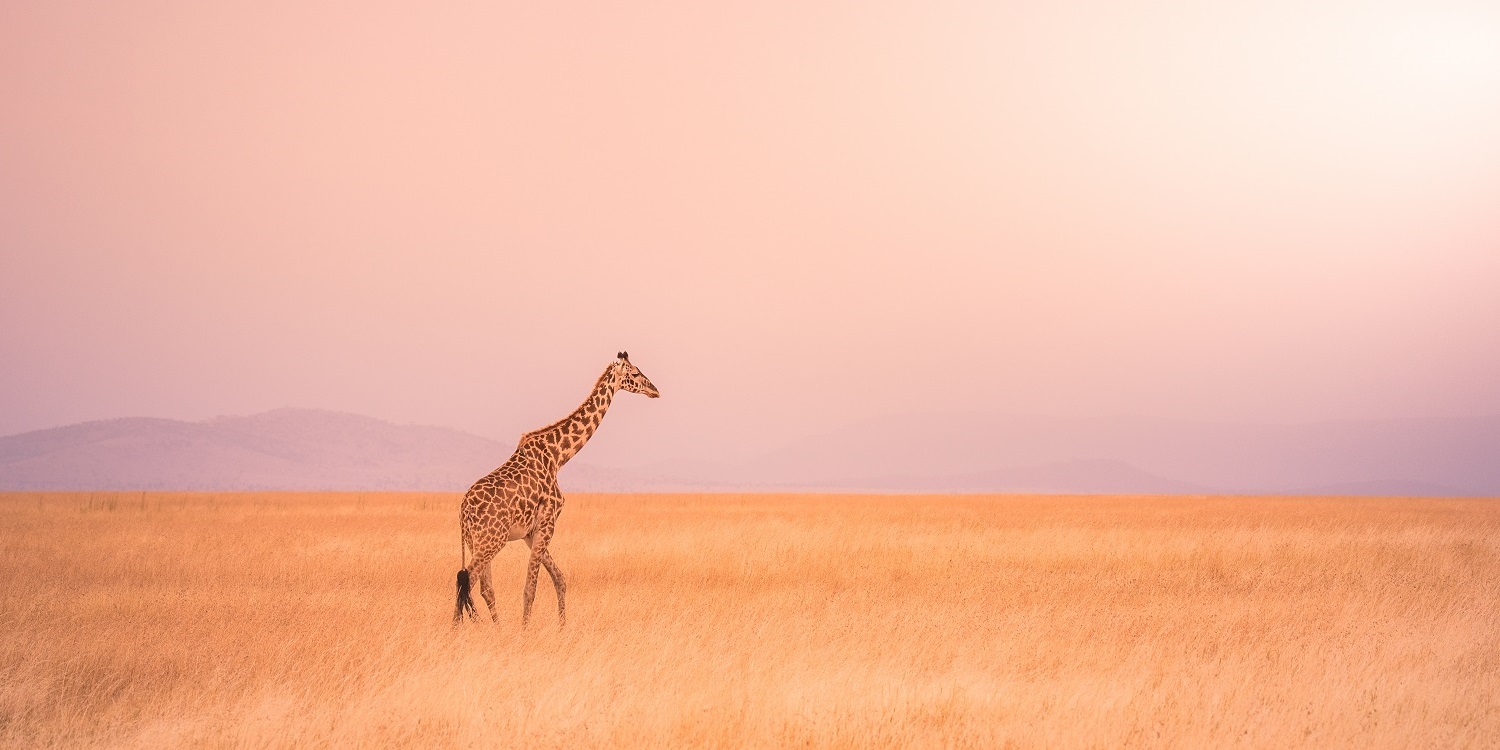
The name Serengeti comes from the Maasai word Siringit, a term used for an endless stretch of land. Established in 1951, Serengeti National Park covers approximately 14,763 sq km in north western Tanzania and stands among Africa’s most revered wildlife reserves. In 1981, the UNESCO listed the park as a World Heritage Site due to its ecological significance and long term conservation value. The park connects with Kenya’s Maasai Mara and holds one of the continent’s largest remaining natural ecosystems and the largest wild animals migration on earth – best known as the great wildebeest migration.
Serengeti features open grassland, acacia woodland, granite kopjes, seasonal rivers, and short grass plains stretching toward the Ngorongoro Conservation Area. Wildlife concentrations change throughout the year according to rainfall and grazing conditions, influencing animal distribution in different parts of the park. Central Serengeti maintains consistent wildlife activity throughout most months, while southern and northern sections attract seasonal migration traffic.

Some argue the best time to visit the Serengeti National Park is between June and October. But in fact, you can visit the Serengeti any time of year and still enjoy an exceptional safari.
Depending on your interests and goals, here’s what you can expect when visiting Serengeti.
The dry green season between the short and long rains.
The long, dry winter season – best for game viewing.
The ‘long rains’ over about six weeks.
The couple of weeks of ‘short rains’
Home to the World’s Largest Animal Migration
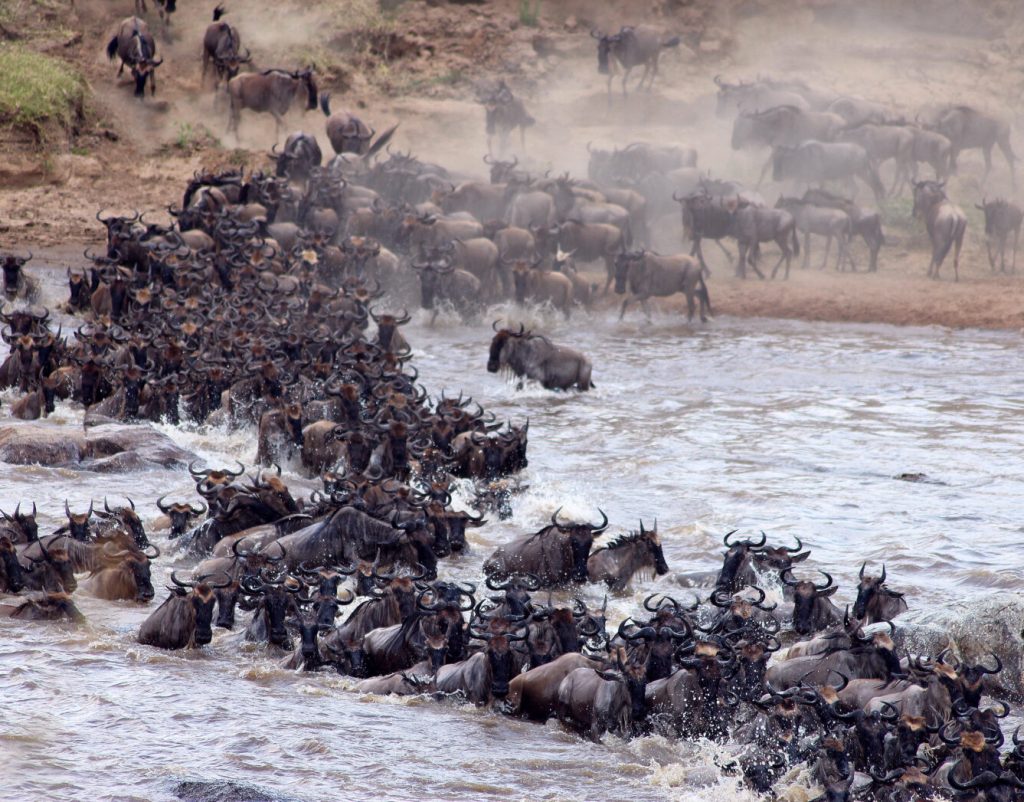
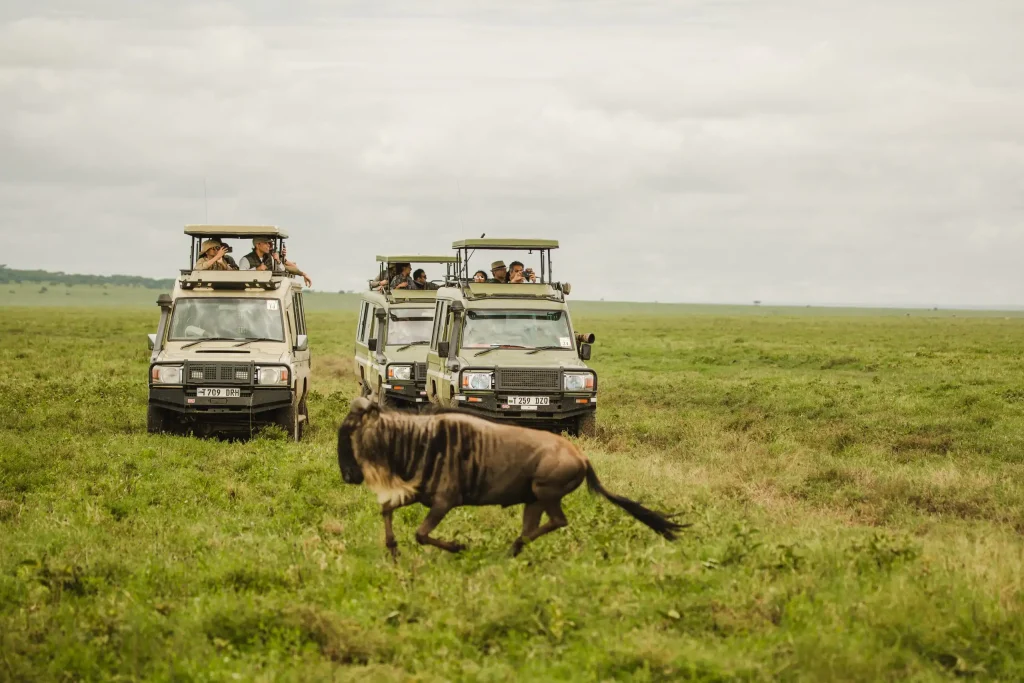
The Great Wildebeest Migration is the world’s most famous wildlife spectacle. The migration is not a single moving line of animals but a constant marathon involving more than 1.5 million wildebeest alongside zebra and gazelle populations moving through Serengeti and Kenya’s Maasai Mara ecosystems.
When it comes to visiting Tanzania’s Serengeti to see the migration, deciding when to go and where always involves some element of risk and recent information. Here’s a general overview of what usually happens, but exceptions are quite normal.
During the rains, the wildebeest are widely scattered over the southern and southwestern section of the Serengeti and the western side of Ngorongoro Conservation Area.
Most streams dry out quickly when the rains cease, nudging the wildebeest to concentrate on the few remaining green areas, and to form thousands-strong herds that begin to migrate northwest in search of food.
In early May, the herds cross northwest towards the Western Corridor. The crossing of the crocodile-filled Grumeti River usually takes place between late May and early July, and lasts only about a week.
By the second half of July, the herds are moving north and northwest into the northern Serengeti and Kenya’s Masai Mara. As part of this northwards push, they make an even more incredible river crossing of the Mara River.
In early September, the last stragglers leave the Serengeti and most will remain in the Masai Mara throughout October.
The herds usually begin moving south again in November in anticipation of the rains, crossing down through the heart of the Serengeti and to the south in December.
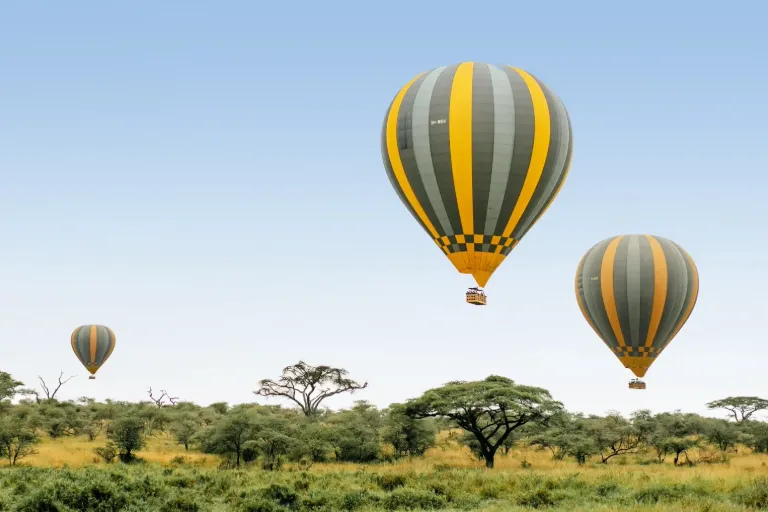
A once in a lifetime experience, like no other! You depart at the day break and venture into the launching site. Floating and drifting with the wind, high and low above the endless plains, will leave you speechless.
Toss a glass of champaign and a bush breakfast after you land. This experience is sure to engrave memories that will last a lifetime.
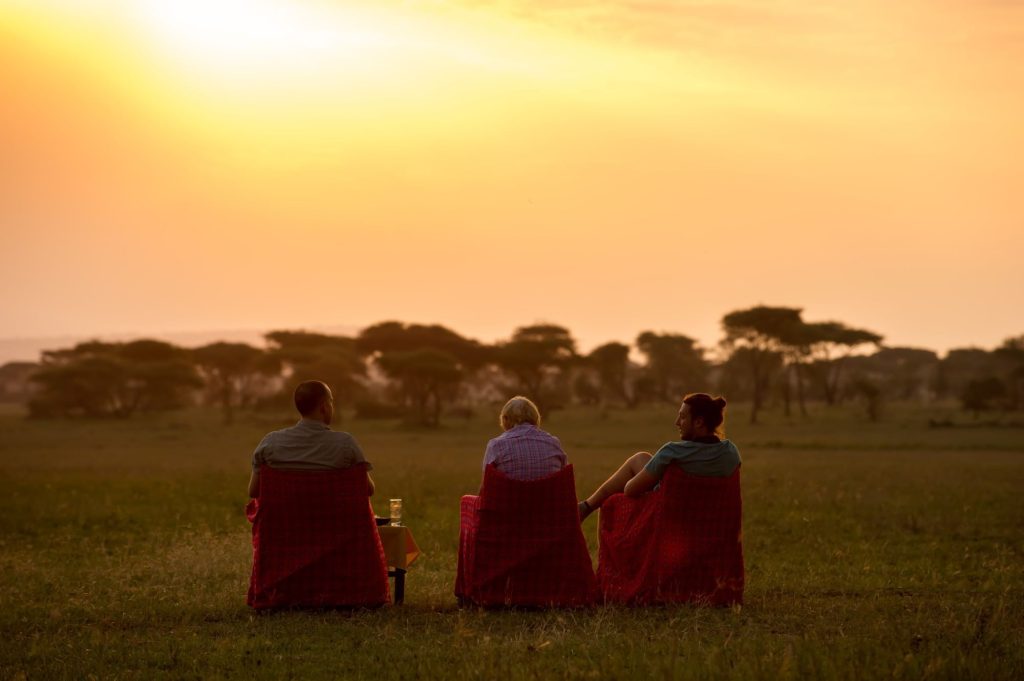
Spend some down time away from the camp – a perfect spot where you can savor your bush breakfast, lunch, or sundowner. Serengeti lets you watch the morning sun and hear bird songs while sipping your morning tea or coffee.
Having your lunch in the shade under the acacia tree, or find an idyllic location to watch the African sunset while sipping your favourite beverage at dusk is an experience like no other.
Without a doubt, a game drive in Serengeti is a state-of-the-art safari activity.
It allows to experience the breeze, awaken your senses to see, smell, hear the gentle sounds, and get closer and personal with the African wild animals in comfort for a half or full day of gaming viewing alongside our incredibly passionate and knowledgeable safari guides.
The name Serengeti comes from the Maasai word Siringit, a term used for an endless stretch of land.
Tarangire National Park covers approximately 2,850 sq km in northern Tanzania’s Rift Valley region